Media Decision Engine
Redesigned a paid-media analytics platform planners had stopped using. Session time rose from under 10 minutes to over 30.
Context
Mercedes-Benz's Media Decision Engine is a paid-media analytics platform used by planners to track, measure, and optimise advertising performance. Built by OMD (Omnicom's media agency), it had grown over years without dedicated design input. I was lead product designer, working with a Product manager, UX researcher and the platform's original builders at OMD.
Problem
Users gave up within ten minutes. The platform had roughly 15 tools, each requiring its own configuration: market, vehicle model, competitor, fuel type, timeframe. A planner running a single scenario had to re-enter the same parameters in every tool. Two to three people used it daily.
What I did
- Information architecture. Regrouped the tools into three process stages, ordered by how planners actually work.
- Global scenario settings. Consolidated shared parameters into one overlay reachable from anywhere, each setting entered once. Local parameters stayed in their tools, clearly labelled.
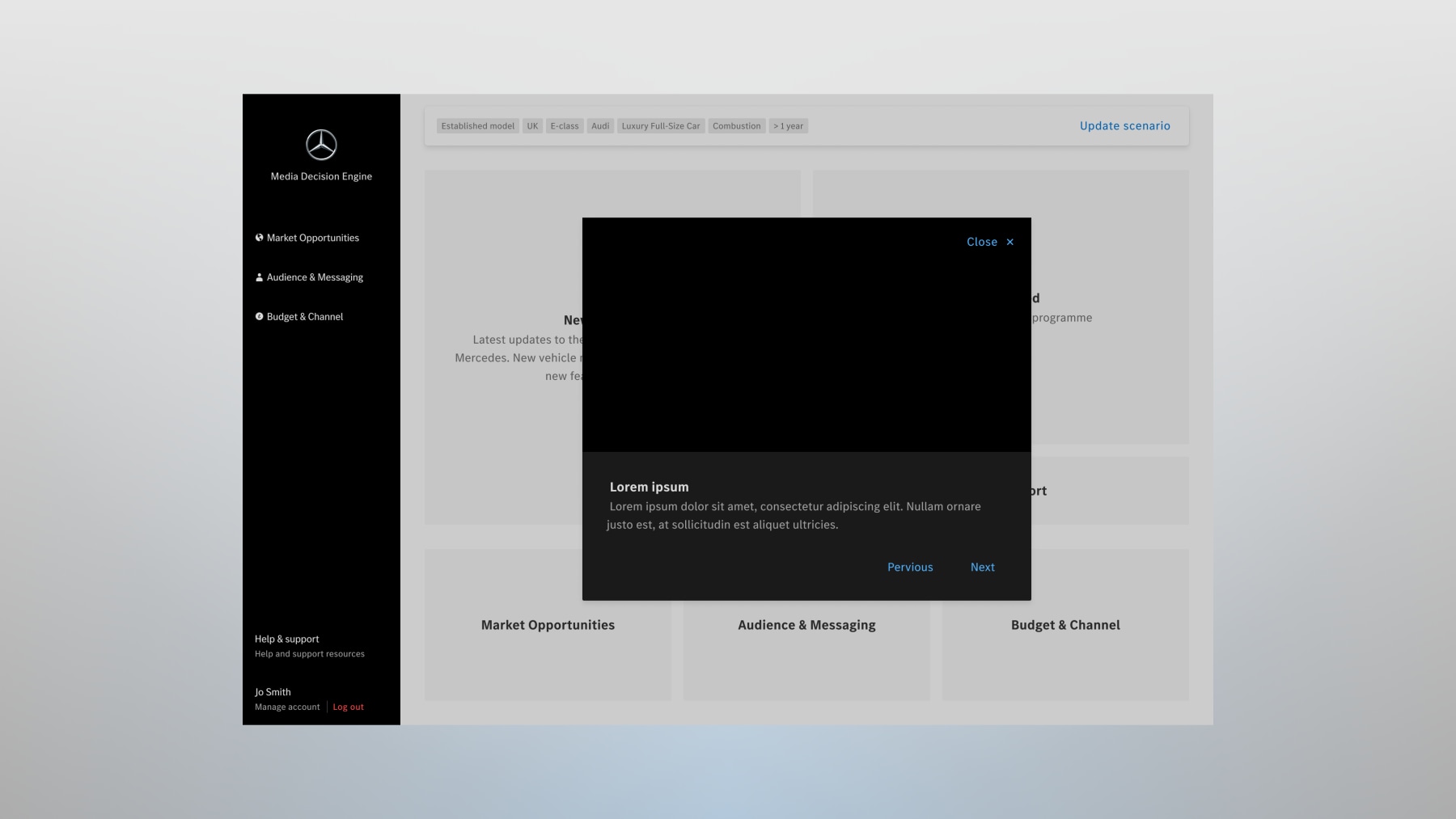
- Onboarding. First-use guided tour, expert-pitched copy, empty states that guide rather than block.



Impact
Within two weeks of test-market release, average session time rose from under 10 minutes to over 30 minutes. Daily active users grew from 2-3 to 40-50 across the account. (James Hutchinson, OMD Data Operations Manager.)
Impact
- 3× time-on-tool Average session under 10 to over 30 minPlanners had been bouncing off slow loading and confusing navigation; now they stay and work in the tool.
- 40–50 daily users A near-abandoned platform became the team's defaultAdoption grew from a 2–3 person daily core to 40–50 people using the platform every day.
- ~80% Fewer settings to enter per scenarioEach setting is entered once globally, rather than per tool, and visualisations update live as scenarios change.

The overhaul got a great reception from test markets. Mercedes are rolling it out across Europe, all very positive.
Credits

Redesigned Mercedes-Benz's paid-media analytics platform. Restructured the information architecture, consolidated tool-level settings into a global scenario model, and rebuilt onboarding and exports across three sequential sprints.
- Alan Long Lead Product Designer, Interbrand
Led end-to-end design across the three sprints, owning information architecture, the global scenario settings model, onboarding and exports. Co-facilitated the stakeholder workshop with Mercedes-Benz and OMD.
- Niq Curry UX Researcher, Interbrand
Conducted user research consisting of stakeholder interviews and user testing. Collaborated with Laura Harding (Product Manager, Interbrand) and me in identifying user insights. Co-led workshops with stakeholders from Mercedes-Benz.
- Laura Harding Product Manager, Interbrand
Collaborated with Niq Curry (UX Researcher, Interbrand) and me in identifying user insights. Co-led workshops with stakeholders from Mercedes-Benz.
- Lisa Pink Project Manager, Interbrand
Managed the timeline and the budget to ensure the project stayed on course. Provided guidance on what was in scope for the project.
- Jonathan Kappler Data & Analytics Product Owner, Mercedes-Benz
A senior stakeholder at Mercedes-Benz who provided strategic input throughout the project. Participated in design workshops led by Interbrand.
- James Hutchinson Data Operations Manager, OMD
A stakeholder from one of Interbrand's sister agencies, OMD, who was part of the team that had originally created the Mercedes Decision Engine. Participated in design workshops led by Interbrand.